

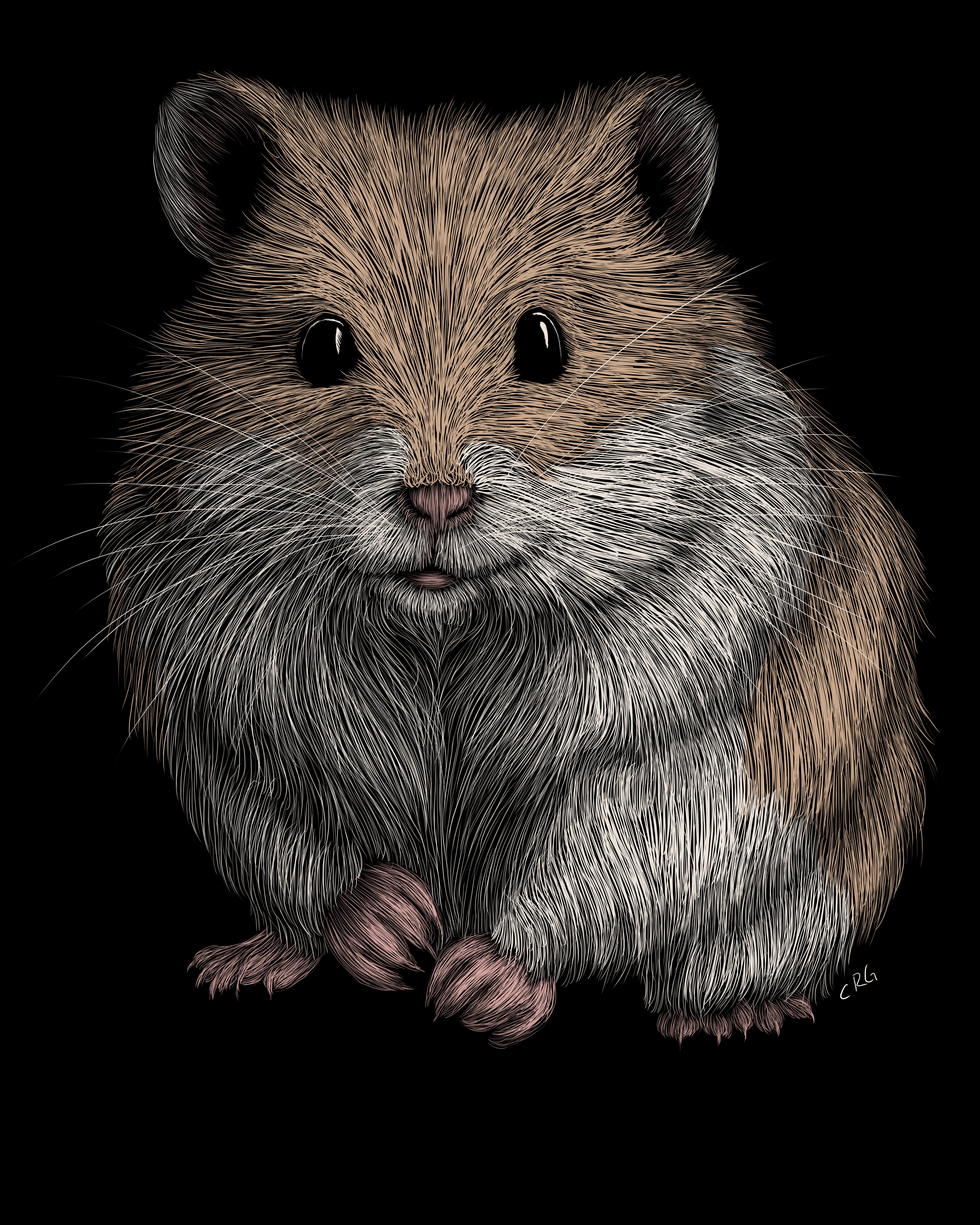
Hamsters in the wild are solitary, yes, each one maintaining their own burrow, but that solitude is deliberate, a survival strategy in harsh environments where resources are scarce.
They’re incredible hoarders, stuffing their cheek pouches with seeds and grains, carrying them back to underground larders that can hold pounds of food—preparation for lean times, for winter, for the uncertainty that defines desert life.
But solitary doesn’t mean simple: hamsters are intelligent, building elaborate multi-chambered burrows with separate rooms for sleeping, storage, and waste.
Mothers raise their pups alone but with fierce devotion, nursing them in the safety of the burrow, and when they’re ready, those pups leave to dig their own homes, carrying the knowledge of how to survive.
You’re allowed to need your own space. You’re allowed to prepare for the future, to protect yourself, to be cautious about who you let in. That’s not selfishness—that’s self-preservation, and it’s valid.
Stay wild,
Chris