

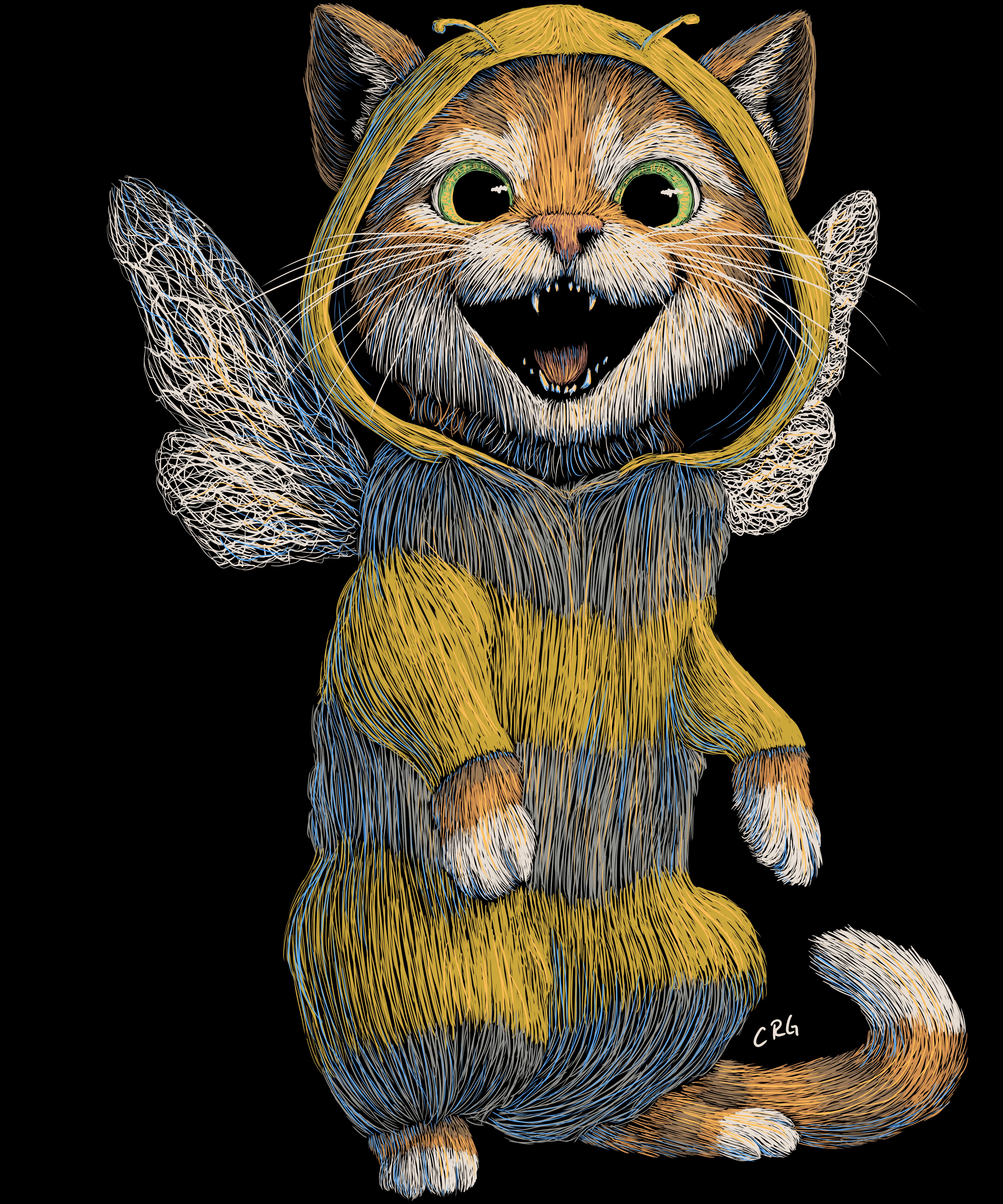
Here’s a little whimsy for your Tuesday—a cat dressed as a bee. And look at that happy kitty face!
Domestic cats are often called solitary, but that’s not quite true—they’re flexible, capable of living alone or forming colonies, depending on resources and context.
Feral cats, when food is abundant, will gather in groups where mothers raise kittens communally, nursing each other’s young, sharing the work of vigilance.
Even house cats, when they trust their humans, show affection in quiet ways: the slow blink that says I feel safe with you, the head bonk that marks you as family, the kneading that echoes the comfort of kittenhood.
They’re not aloof; they’re discerning, offering closeness on their own terms, teaching us that consent and boundaries matter in every relationship.
Cats hunt, yes, but they also play, and play is how they connect, how they say I want to engage with you.
You don’t have to give everything to everyone to matter. You get to choose who you trust, how you connect, and those choices are valid. The relationships you build on your terms are just as meaningful.
Stay wild,
Chris